Time is precious. Click below to jump directly to the English version of the fragment.
[ITA]
Mi vuoi più suora o pornodiva?
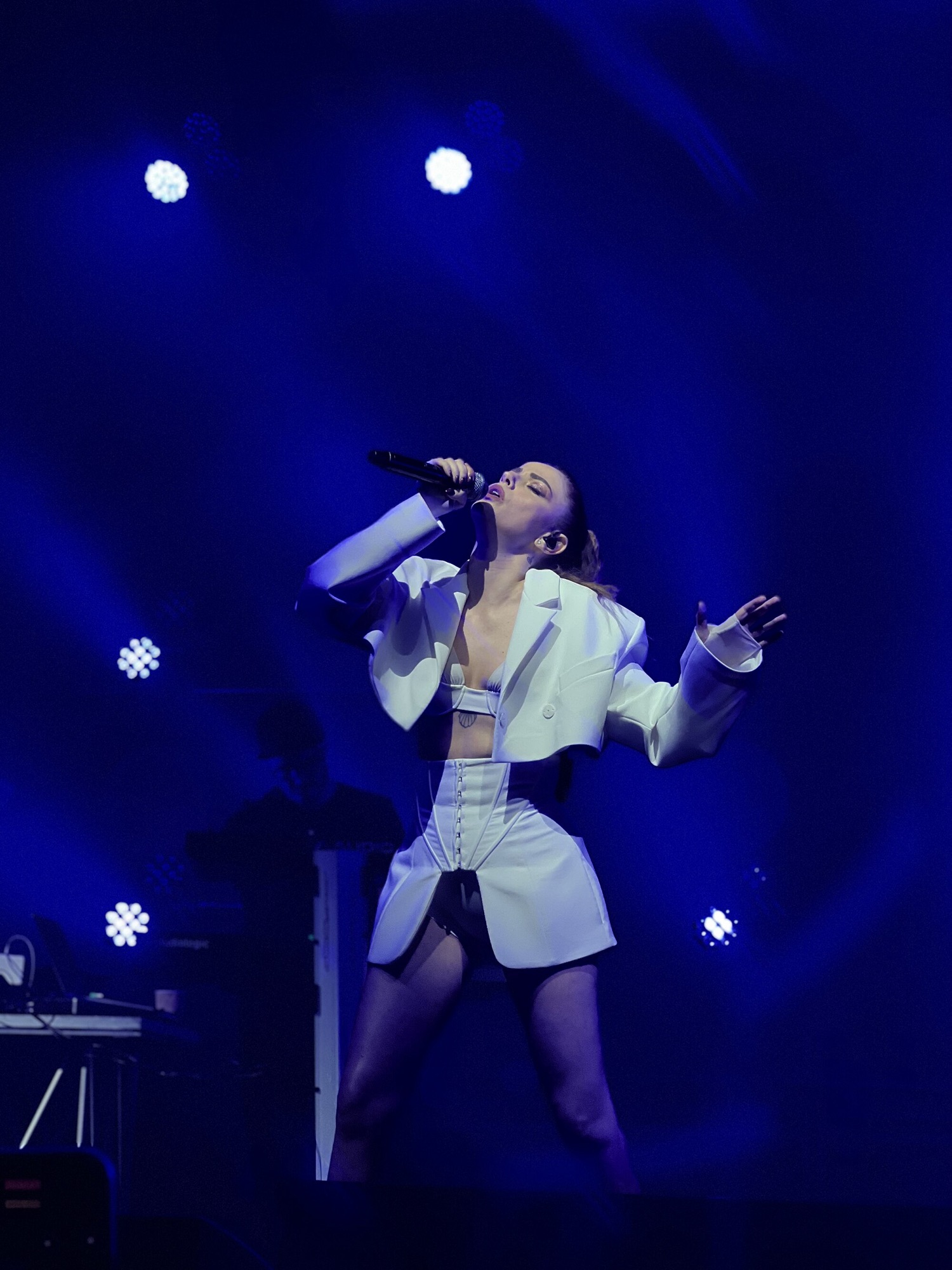
Annalisa in Canzone Estiva, scritto da Annalisa, Paolo Antonacci e Davide Simonetta (d.whale)
Provocare a volte è semplice, quasi diventa banale, negli ultimi anni il panorama musicale lo ha mostrato a più riprese.
Qui allora la domanda: e se ogni tanto, forse anche inconsapevolmente, nel pop ci fosse di più di una semplice provocazione?
È di certo un argomento spinoso, addirittura per certi versi può sembrare forzato, ma ecco, Annalisa ha portato una dimensione nelle sue canzoni quantomeno originale, diversa. Si potrebbero riempire pagine sul finto femminismo e parafrasando la stessa Annalisa “sull’esibizionismo” smisurato di molte sue colleghe e colleghi, che si potrebbe definire KITSCH, non nell’uso improprio che se ne fa oggi, ma nella sua accezione originale, ovvero di qualcosa che vuole sembrare artistico a tutti i costi, ma che è semplicemente di cattivo gusto.
Annalisa in questa “cloaca” ha una sua dignità e veridicità che bisogna riconoscere. Rileggendo un po’ di vecchi frammenti ho percepito la necessità di far capire come l’arte, la filosofia, o in generale la profondità non siano solo nelle grandi opere, ma tutto, anche il pop più commerciale, può rivelarsi interessante, profondo. Ho sempre difeso l’onestà intellettuale, che può mostrarsi in qualunque opera.
In “Maschio” porta il tema dello sdoppiamento che lei stessa in un’intervista a Allmusic Italia descrive come:
«Maschio è una nube. Una dimensione onirica in cui le cose come le conosciamo si disfano, si invertono, si dissolvono e si ricompongono. Un luogo della mente in cui riesco ad immaginare di essere ciò che non sono.»
In “Sinceramente”, invece, chiede spazio, non vuole essere capita, vuole essere lasciata in pace. In “Canzone estiva”, infine, la domanda diventa esplicita: “Mi vuoi più suora o pornodiva?”, provoca il pubblico, chiede apertamente di non essere definita. La domanda è retorica, perché semplicemente lei è entrambe, rifiutando così ogni categorizzazione.
Di certo Annalisa non si arroga il diritto di trattare i temi complessi, come non dovrebbe fare nessuno, ma cerca in un certo senso di rendere un testo pop qualcosa di più. Spesso la profondità si ferma all’immagine nelle sue canzoni, ma credo vada bene così. Nessuno ascolterebbe una canzone pop che “voglia spiegare troppo”.
Non ascolto Annalisa, non è il mio genere, ma questo non mi impedisce di riconoscere un certo fascino artistico che mi ha colpito, finalmente il pop italiano degli innamorati è terminato e c’è una nuova fase, più libera, più al passo coi tempi.
È purtroppo, proprio in questa libertà, che molti cantanti pop sono inciampati, creandosi catene di aspettative e immagine che ora sono costretti a mantenere a tutti i costi. Il pubblico si aspetta qualcosa di preciso, chi canta non può fare passi falsi, forse è solo una gabbia dorata questa libertà moderna.
L’impressione è che il pop abbia cercato di spiccare il volo, ma le ali erano semplicemente cera e piume.
[ENG]
Do you want me more like a nun or a porn star?
Annalisa in Canzone Estiva, written by Annalisa, Paolo Antonacci and Davide Simonetta (d.whale)
Provoking is sometimes easy; it almost becomes banal, and the music scene of recent years has shown this on several occasions.
Here then is the question: what if every now and then, perhaps even unconsciously, there was more to pop than mere provocation?
It is certainly a thorny topic; in some respects it may even seem forced, but, well, Annalisa has brought a dimension to her songs that is at the very least original and different. One could fill pages about fake feminism and, paraphrasing Annalisa herself, the boundless “exhibitionism” of many of her female and male colleagues, which could be defined as KITSCH, not in the way the word is misused today, but in its original sense, namely something that wants to seem artistic at all costs but is simply in bad taste.
In this “cesspool,” Annalisa has a dignity and truthfulness of her own that must be recognized. Rereading some old fragments, I felt the need to show how art, philosophy, or depth in general are not found only in great works; everything, even the most commercial pop, can prove to be interesting and profound. I have always defended intellectual honesty, which can manifest in any work.
In “Maschio” she introduces the theme of the splitting of the self, which she herself describes in an Allmusic Italia interview as:
«Maschio is a cloud. A dreamlike dimension in which things as we know them unravel, invert, dissolve and recompose. A place of the mind where I can imagine being what I am not.»
In “Sinceramente”, however, she asks for space; she does not want to be understood; she wants to be left alone. In “Canzone estiva”, finally, the question becomes explicit: “Do you want me more like a nun or a porn star?”, She provokes the audience, openly asking not to be defined.
The question is rhetorical, because she is quite simply both, thus rejecting all categorization.
Annalisa certainly does not presume the right to tackle complex themes, as no one should, but she tries, in a way, to make a pop lyric into something more. Often the depth stops at the image in her songs, but I believe that is fine. No one would listen to a pop song that “tries to explain too much.”
I do not listen to Annalisa; it is not my genre, but this does not prevent me from recognizing a certain artistic charm that struck me. Finally, the Italian pop of lovers has ended, and there is a new phase, freer and more in step with the times.
Unfortunately, it is precisely within this freedom that many pop singers have stumbled, creating for themselves chains of expectations and public image that they are now forced to maintain at all costs. The audience expects something specific; the singer cannot make missteps; perhaps it is only a gilded cage, this modern freedom.
The impression is that pop has tried to take flight, but the wings were merely wax and feathers.
Attualmente sto leggendo:
What I’m currently reading:
Capitalist Realism: Is There No Alternative? (Mark Fisher)